Graham's Blog

Jack Harper and Freddie’s Revenge

Okay, in this the scenario I’m going to paint, Jack Harper is Freddie Kanouté and Ricky Sbragia is the ‘why ain’t he runnin’ around like a headless chicken?’ element of the West Ham or Spurs support between 2000 and 2005.

One of the reasons Sbragia – Scotland’s Under-19 coach – gave for dropping this ‘luxury’ (his word) player – beyond height and physicality – was just that argument. Not enough running.

About seven years ago I was interviewing Kanouté in the puny gym which Sevilla have attached to their training ground. One of the questions I asked him was, broadly: ‘How come you are so much more appreciated, and successful, here in Spain than in the UK?’

Freddie told me: “In the UK there’s still a mentality that you are only doing your best for the team if you are running around constantly. Fans judge your worth on how much you sweat – even if you are running yourself into the ground and not able to capitalize on the best openings when they come your way.

“In the UK a team will be applauded off the pitch if they have lost 3-0 but absolutely run themselves into the ground. In Spain it’s all different in terms of mentality. Most of the fans have a different view – they want quality, they want wins. If you are a creative player and you choose your moments to run, to work, to close someone down, to run into a channel, then you’ll be judged on your intelligence, your efficacy – whether you create a chance, create a goal or score.

“A team in Spain which has won 3-0 but played very little football won’t get a great reception from their fans, and a team which has lost 3-0 but worked its socks off and showed no quality will be panned. But a team which is technically good, which plays intelligently, will win affection and respect. Fans don’t judge you on how much you sweat the jersey, but on the choices you make, the skill you show. It’s another mentality and one that I’ve benefitted from.”

At Sevilla he made more appearances per season than he had at either London club, sometimes significantly more, and scored many more goals, season in, season out.

He won six trophies, but perhaps that’s not what could have been expected at Spurs and West Ham. However, he consistently scored in the big matches – come a final, come a Kanouté goal.
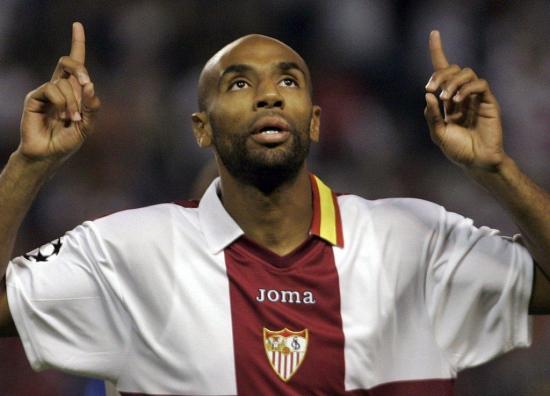
fredi

I guess you already see why this week’s nonsense from Sbragia  about Harper reminded me of that conversation. Sbragia seems to have the idea that Jack Harper doesn’t run enough, isn’t aggressive enough. He said about Harper: “The last time he was with us, he did okay, but I wanted a little more impact. At Real Madrid he can float all over the place, which he does, but with us, he has to be more disciplined.
“He’s an exceptionally gifted lad, but sometimes we can’t carry him. He can be a luxury sometimes. Unfortunately I don’t get to see him enough.”

It’s beyond parody. According to Sbragia, Harper doesn’t work hard enough. According to me, Sbragia, who is not a full-time coach,  doesn’t work anything like hard enough if he’s not flying over to see Harper for Real Madrid Under-19s four or five times per season.

Moreover, Sbragia isn’t paid to be an old-fashioned selector – to pick the team and let the players sort themselves out on the pitch. He’s paid to coach. If he sees things which need upgrading in this player’s armoury then it’s his job to implement those improvements.

If he finds that Madrid have created a Kanouté-type player then it’s the Scotland coach’s job to …. coach him. Ask him to tighten up on tracking. Instruct him when to press in a blue jersey, when not.

My purpose isn’t to be snide about Sbragia. I genuinely think he’s got Worzel Gummage thinking on this issue – head on the wrong way. However, good luck to  him. It may be he’s scouted Scotland’s opponents just perfectly and it may be that his team needs a strong dose of height, physicality and stamina to compete with them. But not to the exclusion of quality – a player Sbragia admits is highly gifted.

However, even if Scotland win the mini tournament, Sbragia will remain in the wrong.

ISIS and Putin willing, there’s a future. Time will come when Jack Harper has filled out in the gym, when he’s at his full height – probably about 6ft 1in. When the senior team will need players like him. When that team may possibly even be built around him and other technically able footballers. Like Ryan Gauld, potentially. What were his experiences under Ricky Sbragia?

Will Harper be there for us? Or will he have declared for Spain? Will his international development have been stunted, even a little, by this experience he’s been denied?

We shall see. Meantime I wonder whether we’ve bumped into one of the generic issues which helps explain why, once again, there are no English teams in the elite rounds of European competition for the second year out of three?

In Spain they have a word for one of the attributes that a player like Jack Harper possesses – pausa. It looks like ‘pause’ and for sure it embodies the concept that such footballers can slow things down when there’s a hurly burly and do something of quality.

I asked both Gaizka Mendieta and Albert Ferrer to define it more fully and they explained that this one word includes concepts like doing the right thing more of the time than equivalent players, making difficult situations simple, doing the best thing more often and with fewer complications.

To me the word speaks of the kind of devolved intelligence I always thought UK football began to lack from the middle 1990s – players who demonstrate match interpretation on the pitch, who can judge the flow of a move, of a phase, of a 45-minute section of a game and either react to it or command the reactions of others around them.

I’m not heaping all these qualities on Jack Harper at his age, but I am saying that players like him represent that genre and that we’ve gone from having a plethora of them in the 1960s, 70s and 80s to having fewer and then, suddenly, almost none. Here is one and our country, represented by Ricky Sbragia, doesn’t know what to do with him.

There’s not only a dearth of such footballers in Scotland, but in the English Premier League, too. EPL clubs buy quality, they develop players of huge determination and athleticism, but quite often they are undone in match-management. Chelsea not killing the game when facing PSG’s 10 men, Arsenal committing the cardinal sin of charging forward and gifting Monaco a third goal at the Emirates, Liverpool’s complete inability to control the ball and dull the tidal wave of attacks coming their way when Madrid ripped them apart at Anfield in the Autumn.

Not for nothing did Manuel Pellegrini coruscate his Manchester City players for their first-half display against Barcelona at the Etihad. Not only didn’t they follow his instructions, they looked like rabbits caught in headlights against Barça. It’s not that David Silva, Eden Hazard, Santi Cazorla or Coutinho suddenly become lesser footballers in England – far from it. But the young English footballers around them, who are born into the Premier League, tend not to have the superior touch, technique, vision and pausa which those developed in Spain, Germany, Italy and France have.

Also, no matter how many good players you stock your team with, when the football they are asked to play week in, week out is forgiving, knockabout and fundamentally drawn on height, power, pace, then when that team comes up against an elite side from Spain, France or Germany deficiencies will emerge.

Sbragia, to me, represents a generation – perhaps two or three – of coaches, scouts and managers guilty of bastardising Citius Altius Fortius – higher, faster, stronger.

England’s top clubs play ‘never mind the quality, feel the width’ football – tremendous vaudeville, but no high operatic notes, balletic grace or 7:84 philosophy.

Make a mistake? Gift the ball away? Never mind, the other side’ll gift it back to us in a few seconds anyway. It’s fast, it’s dramatic, it’s full of players who could out-jump a salmon on a pogo stick (work with me here).

Whether Jack Harper is going to become an elite player or not it is, generically, guys like him, often at ages like his who are passed over, told that their limit will be acquiring super-hero status at Darlington or Stockport or Crewe.

I hope, very much, that Sbragia reacts positively to all this. That he sees the error of his thinking, that he engages in learning about Harper and that he engages in coaching him, if that is what is missing between the coach and this Real Madrid prodigy.

I’d like Jack Harper to be emblematic of, rather than solely responsible for, Scottish football’s renaissance. Not emblematic of our dull, retrograde, already discredited thinking over the last couple of decades.

April live events with Sid Lowe and comedian Kevin Bridges

As we near the business end of the football season, I’ll be talking Champions League and La Liga with my good friend Sid Lowe in Glasgow in April. We’ll be appearing as part of the Aye Write festival on Friday, April 24, at 9pm. Tickets are on sale here, so don’t delay.

The following afternoon, I’ll be interviewing comedian Kevin Bridges about the books that made him, including Fever Pitch, Paddy Clarke Ha Ha Ha and Of Mice and Men. Tickets are on sale now.

To get you in the mood, listen to this podcast  of the last time myself and Sid shared a stage together, at the Manchester Football Writing Festival last September.

See you in April!

G


LEFT WING POLITICS – GINOLA MAKES HIS STAND

Perhaps David Ginola will get the required nominations to run for FIFA President – perhaps not.

But I don’t think that those of us who despair about the manner in which FIFA is scarring the sport we love while remaining untouchable can afford to let the sound of the Frenchman’s common sense be drowned out by anyone in the media who’ve lost their soul, lost their cojones.
Why, when what we desperately need is a credible, supportable alternative to the tired, discredited, deplorable Sepp Blatter era, should lethargic, complacent cynicism rather than open-minded interest be the first reaction? It’s the kind of behaviour which the utterly discredited Blatter depends upon in order to rule. And keep ruling. Quasi-collaboration.

But whether Ginola is tripped up at the first hurdle or whether he storms to the presidency and boots Blatter out of the door in Zurich, some good has already been done. Someone of substance and worth has stood up, using the same kind of language about FIFA as fans all over the planet do. Usually in frustrated anger.

Why is FIFA free to do what it wants? How can a 78-year-old man around whose administration there have been numerous allegations of corruption be in the right shape to run the world game for another four years? At a time when it is reportedly under FBI investigation, why won’t the sport’s governing body force out corruption and adhere to a policy of transparency and accountability? How did a bidding process end up approving a World Cup in Qatar in 2022 when everyone knew it wasn’t fit for purpose, that it couldn’t be played in summer?

I call on those prejudiced by that process, most notably England, Australia, Wales, Scotland and Northern Ireland to make formal their support and nominations in favour of Ginola. Let the man run. Let Blatter be answerable to Ginola’s manifesto.
I was invited to speak to the former Spurs and Newcastle winger yesterday afternoon and here’s what we said. Make your own mind up.


Graham Hunter: What’s broken about FIFA? What drives you to try and win this hugely important position in world football?

David Ginola: It was inspired by talking to people around me. Regarding FIFA behaviour and decisions, so many people told me: ‘We don’t understand anymore.’ There is no trust. Football decisions and decision makers must earn trust. I think that is why. If you want to make positive and fair decisions about football and its development, then people around the world need to understand why and how decisions are made. It must be a transparent process.
I knew it would be a difficult task obviously, but also very exciting and interesting; to make people confident that all the decisions made at the top of football are fair, well-explained, without controversy or doubt.

GH: What part does the theme of respect play in your choice to try to run for presidency?

DG: Respect is everything. I’ve spent most of my time in football, I dreamt about becoming a professional when I was only nine, I signed my first contract aged 19 and then for both good and bad I spent the following years in a very emotional football life. Passion is very important but the word respect is used a lot – it is said as a word, but there isn’t always the act of respect next to that word: respecting the game, the people; knowing that if we have had the chance to earn a living in the game it’s because millions of people buy season tickets or subscribe to TV broadcasters.
You must respect all that. Around the world it’s fans who have made football the greatest and most popular sport on earth. They should get the rewards from that.
Football is not just an elite bunch of people: football belongs to the people. Anyone, anywhere on the planet who loves the game. In FIFA you should be rewarded for what you do towards the people who make football, not rewarded for what you do towards yourself.
Football decision-making needs to be more approachable, something which makes more common sense to people. Shown as something very transparent. We need to demonstrate integrity, and dignity. As a person, as a decision maker. It’s not about yourself. Your personal position should be at the bottom of the list.

GH: I understand that you associate with the trend at Bayern Munich for incorporating their great ex footballers, Beckenbauer, Rummenigge, Sammer, even Hoeness into how that club is run? At Barcelona over the last 10 years there was youth, energy and vision from Laporta, Begiristain, Soriano, Rijkaard and Guardiola – are these themes similar to what you want to bring to your FIFA presidential candidacy?

DG: Yes, definitely. I read an article by Laporta recently suggesting that if he were in charge of PSG then he’d ‘immediately take on board David Ginola’ because he thought I’d represent as a man, as a symbol, as an ex-player what Parisian football needs.
I believe that one of the things Laporta’s Barcelona achieved was to put the formation and education of their players as young men before their formation as footballers. For players to be able to understand what life is all about, to understand what fame is all about, what making money is all about. How to be prepared and to cope. This philosophy is great because if you form the footballer before the man it’s leaves many more complications.
Speaking more broadly on that subject now, I think we in football would have a better understanding from fans around the world if we can improve the way we educate and teach developing players.
I’d like professional footballers to be more aware, via their education and formation, that the reason they are standing there on the pitch, playing football, doing the thing that they love most and being paid for it is simply because there are people, fans, who are paying good, hard-earned money to come to the stadium to watch that game. It’s imperative for those within football to comprehend and not ignore that. I always praise the fans and the people in the football infrastructure because they can make you great … they can change your life. I’m faithful to the concept of the debt we owe them and I’d love to see that more often being part of the mentality of modern football.
I want people to trust us in FIFA – to trust decisions. I want it to be clear that the decisions we’d make in charge of football would be fair, clear, sustainable and able to be backed by the majority of fans.
Take the example of Bayern. Of course, intelligent former footballers working in harmony at the top of the club for the good of the club is the best thing you can do. People like us know football inside out. You have people working on the financial side, on the marketing and so on, but as a former footballer it enables you to think not simply about the rectangle of the pitch but what football represents as an entity around the world. It allows you to make the right choices, to consider problems which might arise and to take decision not just because you think it’s right for you but right for the great majority of the people who are important – fans and players. You think more widely, consider more.

GH: Since retiring, you’ve acted, you’ve represented Red Cross, Unicef, you’ve produced award-winning wine, become a respected football analyst on television, advised a football club in France – it appears you put effort into projects and that people seem to trust you?

DG: Ask Red Cross and Unicef why they made those decisions to ask me to represent them. I guess it’s because they think I’m a man of integrity. When I speak, I’m honest … I’m a cool guy. ‘I’m a cool guy’ … that’s what represents me best. Saying ‘cool’ doesn’t mean I’m not serious or egotistical. But I’m down to earth, I’m respectful. Wherever you come from, whatever your creed or colour, it’s not a question for me. I’m very approachable. Very passionate. I think most of all it’s integrity. When people look deep into your eyes this is what they see. This is who I am. And I hate talking about myself this much!

GH: Do you really believe you can tolerate the dirty world of football politics? Can you genuinely cope with that?

DG: I understand, but this is exactly what we want to change! We want to show that a world association like FIFA can be trusted. That people can feel: ‘Wow! what a change!’ We had ‘X’ before but now we have people who actually are transparent in everything they do. You have to think of it like a charity. In a charity, you do things for others. Spending money for others, do the right thing at the right time for the people who need it. Simple as that. No politics. No hiding, no secrecy. As president I’d want to be able look at myself in the mirror and know I have nothing to worry about. That we made the right decision and we’ll explain it to you. Our administration would explain what we considered and why we chose this way over that. People have a problem with FIFA because they don’t explain openly enough. And then when they do explain, it’s not clear. Not clear at all. There’s controversy. This is the thing that shouldn’t happen in football. Football is a sport, not politics. There’s politics when money is involved, but I want people to understand that FIFA, under us, can be crystal clear. Sport is for the people – I want to give it back to them.

De Gea, Casillas and Valdés – the No.1 issue for United

It was only partly because somebody misquoted/misinterpreted me about David De Gea on Twitter that I decided to explain more about Manchester United’s increasingly excellent Spanish keeper.

The fact is that there’s also more to say since I wrote this column for Paddy Power on the subject.

On Twitter the other day I was asked what was happening with De Gea and I said that United were beginning to make their offer to him but that, in my view, it should have been tied up by now.

That was misinterpreted by someone, and then widely re-tweeted, as ‘was expected to have been done by now’. Wrong.

Ed Woodward has, naively I think, allowed the great onslaught of getting rid of David Moyes and his staff then signing Van Gaal, his team and new players, to get in the way of renewing De Gea’s commitment to United.

Some may think that with a year and a half to run on the current deal that United’s chief exec is within his rights. Wrong again.

This is a dangerous time in any contract renegotiations. In an attempt to prise the best possible deal for his client, every single agent of worth will point out to the club that unless terms are met they’ll put out a statement about ‘concentrating on the crucial last five months of the season,’ not hold any more meetings, look good in front of the fans and then, suddenly hit the summer holidays without a new deal even being close and, worse, be within six months of being able to negotiate a freedom of contract move.

It’s why shrewd presidents, chairmen, chief execs, managing directors and the like get the really important players tied down on better terms by this stage of a contract at the very latest.

Woodward is briefing that he and United are ‘relaxed’ about things. If this means that a new contract is within touching distance –  fine. Hats off. If not, then Woodward is no longer in the power chair – De Gea’s agent is.

I recently watched a terrific BBC 4 documentary on Blondie’s career. They managed to sever ties with a manager, Peter Leeds, who was doing himself more good than he was the band, but they broke up amidst acrimonious negotiations at a time when the single ‘Heart of Glass’ was surging up the charts worldwide. With each passing week the buyout to get rid of Leeds was getting more expensive for Blondie because their worth was literally increasing by the day.

So it is with De Gea. Already the lynchpin of United’s renaissance under Van Gaal, he’s produced match-winning performances against Stoke, at Arsenal and at home to Liverpool which ensure that the fans are utterly devoted to him. Many of them, inaccurately I think, believe that he’s the second best keeper in the world. But he’s now in the elite, no question.

So, to the other clouds on the horizon

Madrid.

Iker Casillas is playing well again, has been for weeks. He’s been a principal architect of Madrid’s Spanish record-breaking run of 21 straight victories. He is still Spain’s No.1 keeper and will be so long as he maintains his form.

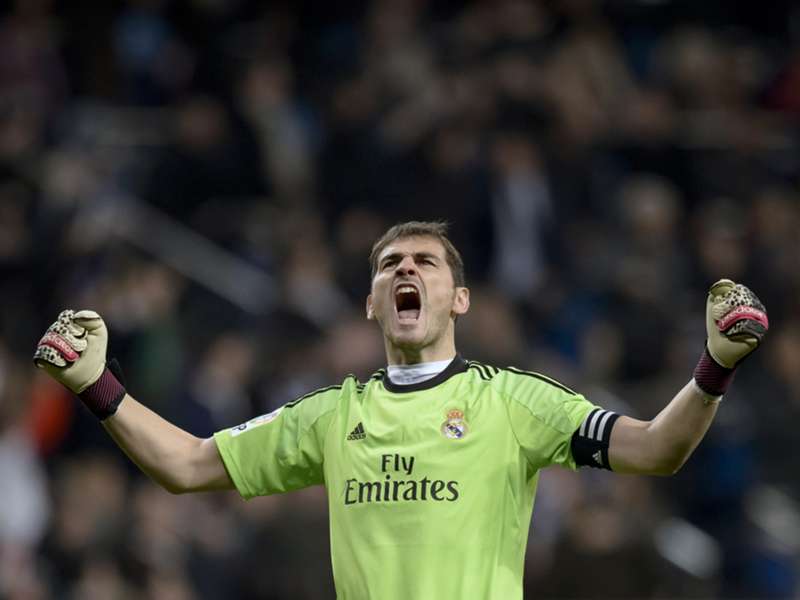
Iker

De Gea is now clearly established as his deputy and will play certain matches – friendlies and any qualifying match which Vicente Del Bosque decides is non-threatening. But the Casillas rejuvenation has made it much harder for anyone at Madrid who wants to get rid of the 33-year-old. He already has a massively lucrative contract at Madrid until 2017 – when he’ll only be 35. If Madrid want to pay him off then a] it’ll be brutally expensive b] Casillas has stated his intention of finishing his career at the Bernabéu c] there is not, currently, a hot market in the right type of major European clubs who’d like to buy the Madrid captain and, thus, persuade him that it’s in his interest to leave the European Champions.

Madrid also have Keylor Navas – younger, talented and recently purchased on a €10m, six-year deal. So while the idea of buying a young, talented, experienced Spaniard who’s going to be No.1 for Spain for years to come and who once starred for Atlético Madrid clearly attracts president Florentino Pérez, this would not be an easy coup to pull off.

I’ve spoken to a number of people who work around De Gea or who know him. Their verdict is that if the right offer to move to Real Madrid was on the table, and the bid was big enough for United to accept, he would probably say ‘yes’.

Is he happy at United? Yes.

Does he value Premier league football? Yes.

Does he, like many other young talents at the club, think that special things are about to happen? I’m assured that the answer to that is ‘Yes’ too.

But would he snub Madrid if United were willing to sell? No, probably not.

What I argued in the Paddy Power column, and still fully believe, is that it’s the wrong time for him to leave United and the wrong time to return to Madrid. He has experience to gain, he remains a very young keeper, there’s the potential for winning times at Old Trafford.

Should Iker stay then it’ll be a fight to the end to establish who is Madrid’s and Spain’s No.1. De Gea doesn’t need that – he needs continuity, to gain top-level experience, to be driven forward in the knowledge that a top-level club absolutely depends on him not only as starting keeper but as one of their top two or three most important footballers.

Now comes the last complicating factor.

Victor Valdés is an exceptional talent – fit  now and available for free. My info is that he’s been training very well, that his recuperation from that horrible injury has proceeded excellently, that his English has improved immensely and that he’s popular and fiercely competitive on the Carrington training ground. He’ll imminently be playing in full practice matches.

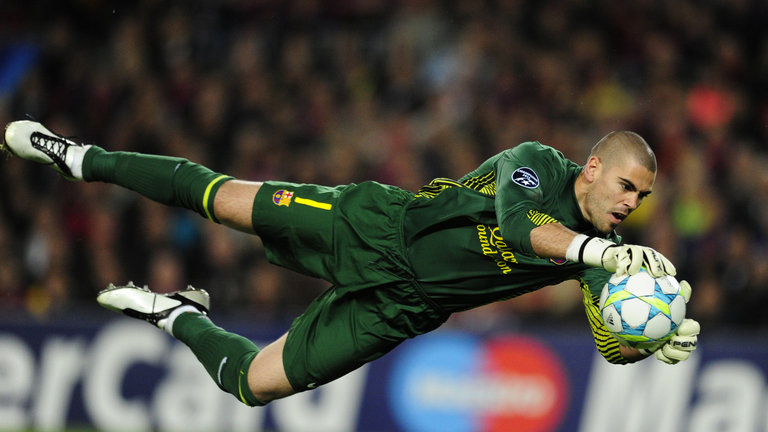
Valdes

It’s ironic that of all the keepers De Gea was most impressed by it was Valdés, ahead of Casillas, Van der Sar and Schmeichel, who led the way. Eric Steele, the former United keeper coach who did so much to bully De Gea out of his greenhorn months at the club and into this golden period where he’s playing, if anything, better than when he won the title, used to be a major fan of Valdés. He’d often quote to De Gea a particular performance the Catalan had given for Barcelona or would highlight specific strong points he wished De Gea to copy from Valdés. So to have the rehabilitating Spaniard popping up at United training was, initially, unsettling for De Gea. Typically, he has taken it as a challenge, responded, upped his daily and his match level and things are on an even keel.

But, what of United? If they sign Valdés, which would normally seem a no-brainer –  talented, experienced, fiercely competitive, professional, fit, relatively young for a keeper, and free – then what will the Catalan be aiming at? And what impact would that have on De Gea?

Valdés may have a lot of football in him before he retires to wind-surf, ride his Harley Davidson and pick out classic rock riffs on his guitar, but he’s just lost the best part of a year, a World Cup and a major signing-on fee from Monaco thanks to injury. He will not want to play second fiddle to anyone for very long, wherever he moves to. Thus, if United allow Valdés to move on they may very well be kissing goodbye to a massive bargain – one who could give a club a brilliant, winning five years.

If they sign him, however, what does that do to the negotiations with De Gea? Does he ask for a guarantee of being first choice? Does it harden the negotiations to the extent that they break down? Does he feel undermined and under-valued?

Delicate stuff in the complicated micro-universe of elite football.Delicate stuff which Ed Woodward could have avoided completely if he had not been tardy, if he had not been distracted by, admittedly, turbulent times.

My strong belief is that David De Gea should stay – stay and grow and win things at United. Then return home to Madrid or Barcelona at the peak of his powers. He should stay, he probably will stay – but the whole subject is much more in the balance than it should be if United had done their housework properly.
GH

Spain v Germany: The Inside Story of the Euro 2008 final

Tomorrow the reigning and former world champions meet in a friendly I’m looking forward to hugely.

Spain v Germany was the key fixture in the story of Spain’s historic treble of tournament victories. The semi-final in South Africa in 2010 was epic. But the final of Euro 2008 was the calling card for the new Spain, and the game when the world fell for Xavi, Iniesta, Iker and the rest.

Read the inside story of that match here, taken from Spain: The Inside Story of La Roja’s Historic Treble.

And enjoy the rematch, tomorrow.

https://www.scribd.com/doc/246852119/Spain-v-Germany-The-inside-story-of-the-Euro-2008-final